11Jul 2023
History and Origins of RC19
19:47 - By Jennifer Curtin
RC19 — IPSA's Research Committee on Gender, Politics and Policy — has been at the forefront of feminist political science since its founding in 1976. From its early focus on women's absence from public life to contemporary debates on intersectionality, quotas, and global women's movements, RC19 has shaped the discipline across five decades and every region of the world.
By Marian Sawer, July 2023
The 1970s were a time when feminists started bringing ideas from the 'second wave' of the women's movement into political science. They reframed the study of politics, using the new perspective ‘the personal is political’ and challenged the traditional division between the public and the private on which political science had been based. They created new bodies in political science associations to challenge assumptions that the domination by men of both politics and political science was part of the natural order rather than a problem of the gender order. IPSA was the second political science association in the world, following the American Political Science Association, to establish such a body. Initially it had what now seems the very old-fashioned name of 'Study Group on Sex Roles and Politics'. This reflected theoretical perspectives of the time, but was later criticised for a focus on socialisation rather than power. The Study Group, established in 1976, became a fully-fledged research committee – RC19 – in 1979.
The first chair of RC19 was Margerita Rendel of the University of London.[1] She organised a meeting of the Sex Roles and Politics Study Group at the University of Essex in 1979 and then at the IPSA Congress in Moscow in the same year, where for the first time, full research committee status was granted. She published a collection entitled Women, Power and Political Systems (1981) based on the papers given to these meetings. In true IPSA style contributors came from all regions of the world and included Fanny Tabak from Brazil, Judith Stiehm and Beverly Cook from the USA, Sirkka Sinkkonen and Elina Haavio-Mannila from Finland, as well as contributors from Africa, Turkey and WHO. The book problematized the absence of women from public life and argued that democratic theory had overlooked the family as an operational political unit that placed constraints on women’s political activity.
The first RC19 book, 1981
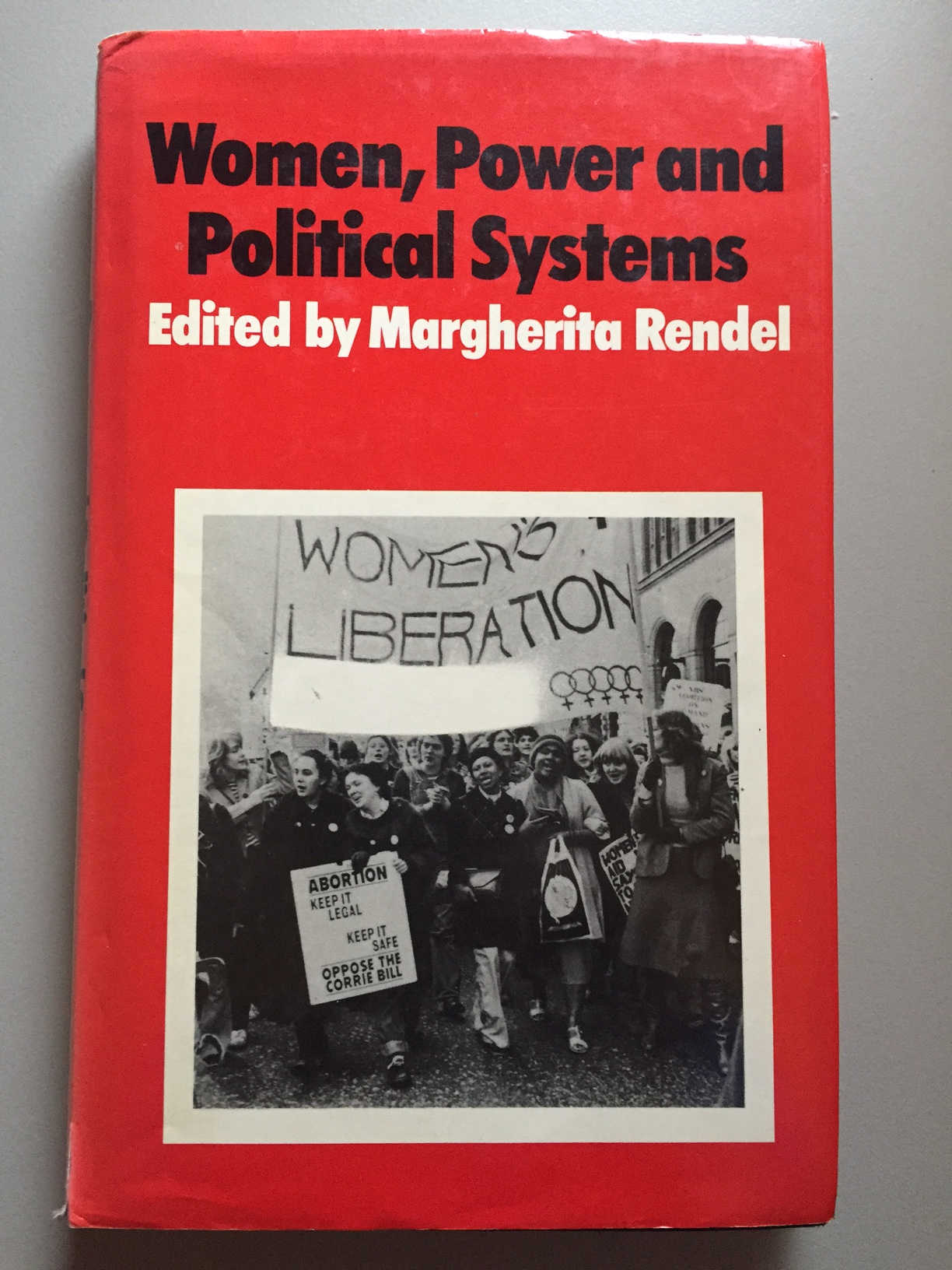
A subsequent RC19 collection, with papers prepared for the 1982 IPSA Congress in Rio de Janeiro, was edited by Judith Stiehm and published as Women’s Views of the Political World of Men (Transaction Publishers, 1984). Contributors of the cutting-edge papers included Jane Jacquette, Drude Dahlerup, Carole Pateman (on the ‘shame of the marriage contract’), Fanny Tabak, Nancy Hartsock, Anna Yeatman and Judith Stiehm herself on the ‘man question’. The following year, RC19 office bearer Renata Siemienska, published a special issue of international Political Science Review 6 (3) entitled ‘Women in Politics’. It contained articles on factors affecting women’s political participation in countries including Brazil, Canada, France, Italy, Poland, Sub-Saharan Africa, Turkey and Yugoslavia.
Over its history RC19 has continued to engage in research activities such as roundtables, congress panels and publications. By the end of the 1980s it had around 300 members who attended its events and received its newsletter. Roundtables were held in India in 1986, Germany 1987, Poland 1988 and the USA 1990, the latter on the topic ‘Women in Organizations: Strategies for Empowerment’.
From 2000, RC19 has also organised one-day Pre-Congress Workshops (also called Roundtables) before each IPSA Congress. Until 2012 the IPSA Congresses were held every three years, subsequently every two years. A list of these workshops is provided below under RC19 Events. Some became books, such as the 2006 workshop convened by Marian Sawer, entitled ‘Comparing the Trajectories of Women’s Movements’ (published in 2008 by Routledge under the title Women’s Movements: Flourishing or in Abeyance).
RC19 has also supported new gender initiatives within IPSA as a whole. For example, a Study Group on Women, Politics and Developing Nations was established in 1988 chaired by Najma Chowdhury of the University of Dhaka. It was given research committee status in 1992, becoming RC07 and a partner with RC19 in many activities.
One of the RC19 members who has played an inspirational and tireless role over its history has been Jane Bayes from the USA (RC19 Chair 1988–94). In 1995 Jane represented IPSA at the UN Fourth World Conference on Women in Beijing. Jane and six other members of RC19 and RC7 attended the NGO Forum in Huairou and most also attended the official conference in Beijing. IPSA has had a relationship with UN agencies since its beginnings and is on the ECOSOC Roster. At the NGO Forum in Huairou RC7 held a Roundtable on ‘Transformational Politics – Grassroots Mobilisation and Empowerment’, written up by Jane in a ‘Report from Beijing’ in Participation, Winter 1995. Subsequently Jane organised Roundtables in Seoul in 1997 and Ankara in 1998 on the challenges of implementing the Beijing commitments, especially in Catholic and Muslim countries.
To reflect on developments in the field, Jane published a collection Gender and Politics: The State of the Discipline (Barbara Budrich 2012) in the IPSA book series, The World of Political Science. It included contributions from long-standing members of the IPSA gender committees such as Amanda Gouws, Monique Leyenaar and Mary Hawkesworth. A particular theme of the collection was Jane’s concern over the geopolitics of knowledge production and transfer, even within an organisation such as IPSA with its mandate to provide support for political science across East–West and North-South divides.
RC 19 has taken up a broad array of issues over the three decades of its history. Major themes have included: political participation of women; affirmative action, quotas and parity; women and public policy in comparative perspective; women in public administration; women and politics in third world countries; women, religion and politics; the role of legislation and the status of women; women and the transition to democracy; strategies for the empowerment of women; feminist theory; women and nationalism; eco-feminism; the global women's movement; and gender and international institutions. New theoretical frameworks have been brought to bear on gender and politics, including an increased emphasis on the inner life of institutions and on discursive framing.
RC19 panel on electoral gender quotas, the 2006 IPSA World Congress
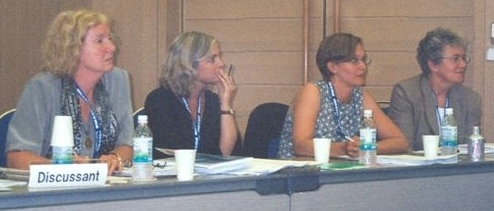
Left to right: Drude Dahlerup, Lenita Freidenvall, Mona Lena Krook, and Pippa Norris
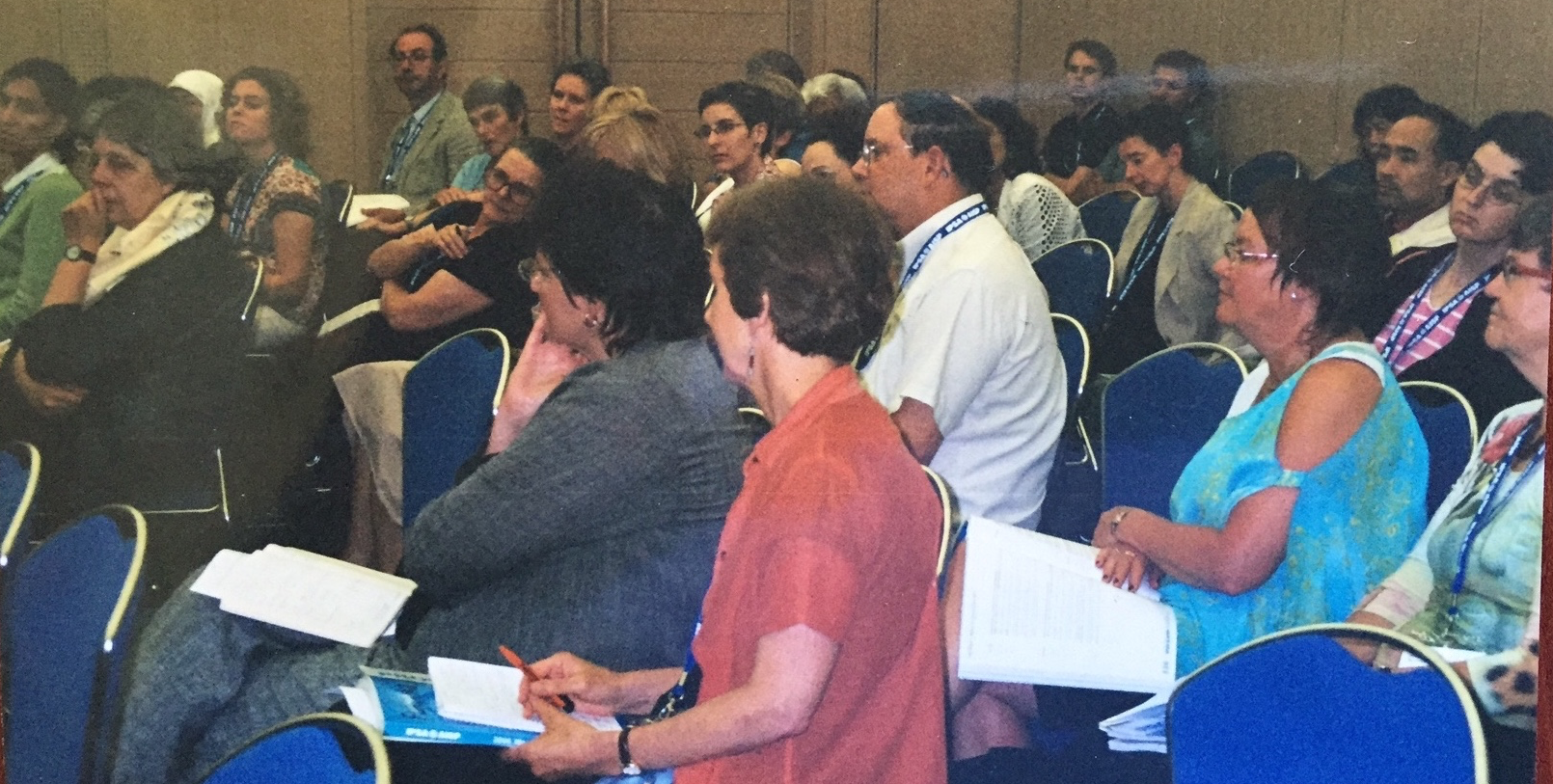
Some of the over 60 participants in the electoral gender quotas panel convened by Marian Sawer, including Emanuela Lombardo, Mieke Verloo, Jane Bayes, Jill Vickers, Fiona Mackay, Jackie Steele, Mary Hawkesworth, Gunnel Gustafsson, Monique Leyenaar, and Sylvia Bashevkin.
In 1986, IPSA RC 19 was joined by another transnational research group on politics and gender. The ECPR Standing Group on Politics and Gender was established following a meeting called by Diane Sainsbury at the ECPR Joint Sessions in Gothenburg. From 2009 its biennial conferences became the showcase for gender and politics research. IPSA RC19, however retained its distinctive mandate for promoting gender and politics research in both the Global North and Global South and across East/West boundaries. Like equivalent bodies in national political science associations, RC19 also sought greater recognition for feminist and gender research within the discipline, both through specialist prizes and through the award of mainstream prizes. For example, it supported the creation of what became the Wilma Rule Award for best IPSA Congress paper on gender and politics, first awarded at the Québec City IPSA Congress in 2000.
From its origins until 2003 RC19 retained its title of 'Sex Roles and Politics'. The name of the Committee was changed in 2003, with the approval of the IPSA Executive, after an electronic ballot of members showed overwhelming support for a shift to 'Gender, Politics and Policy'. The new title reflected theoretical developments such as the growth of masculinity studies and an increased focus of intersectionality and diversity. In other words, ‘gender’ was not simply a synonym for women, as sometimes believed.
A third gender committee, RC52 on Gender, Globalization and Democratization came into being in 2003. RC19 has helped co-ordinate a number of joint activities by the three gender research committees including a very successful two-day workshop before the 2009 IPSA Congress in Santiago. Unfortunately, RC52 was abolished in 2014 following a void in its leadership. However, RC19 has continued to thrive, with some 166 members in 2023.
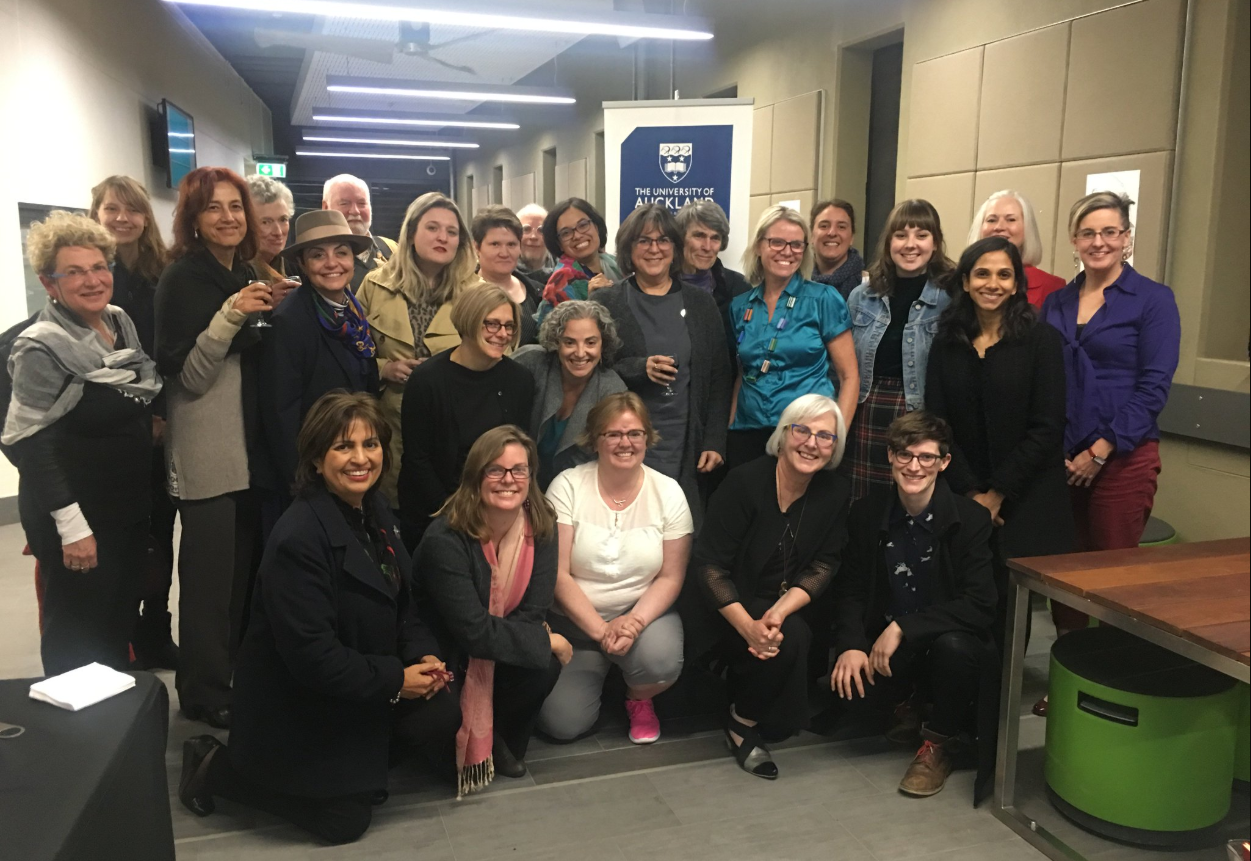
Participants at the 2018 workshop, including Carol Johnson, Jim Jose, Sarah Childs, Jennifer Piscopo, Amanda Gouws, Jane Bayes, Jennifer Curtin, Sonia Palmieri, Blair Williams, Linda Trimble, and Jackie Steele.
In 2025, the IPSA Pre-Conference Workshop "Contemporary Reflections & Future Agendas in Gender & Politics" brought colleagues together in Seoul, hosted by RC07 and RC19 and sponsored by Seoul National University and the Ewha Institute of Politics.
Ki-young Shin (Ochanomizu University) opened with a keynote reflecting on gender and politics in East Asia. This was followed by a lively panel, "Looking Ahead: Contemporary Topics in Gender & Politics," chaired by Swarna Rajagopalan (Krea University; RC07 Chair), with panelists Meredith Weiss (SUNY Albany), Amanda Gouws (Stellenbosch University), Anya Kutleva (University of Wolverhampton), and Yesola Kweon (Sungkyunkwan University).
The afternoon closed with a session on "Publishing & Career Development," chaired by Debora Thomé (Fundação Getulio Vargas; RC19 Chair), featuring Chang-Ling Huang (National Taiwan University), Jiso Yoon (Korea Women's Development Institute), Jennifer Piscopo (Royal Holloway, University of London; Editor, European Journal of Politics and Gender), and Kavita Ramdas (former CEO, Global Fund for Women). Min Hee Go (Ewha Womans University), the local host and organizer, gave the concluding remarks.
Chairs of RC 19
1979–1982
Margherita Rendel (University of London, United Kingdom)
1982–1985
Drude Dahlerup (University of Aarhus, Denmark) and Fanny Tabak (Pontifícia Universidade Católica, Rio de Janeiro, Brazil)
1985–1988
Hem Lata Swarup (New Delhi, India) and Eileen Wormald (Worcester College of Higher Education, United Kingdom)
1988–1991
Jane Bayes (California State University, Northridge, United States) and Monique Leyenaar (Leiden University, Netherlands)
1991–1994
Jane Bayes (California State University, Northridge, United States)
1994–1997
Socorro Reyes (University of the Philippines, Philippines)
1997–2000
Janine Mossuz-Lavau (Paris, France)
2000–2003
Laura Guzmán (University of Costa Rica, Costa Rica)
2003–2006
Marian Sawer (Australian National University, Australia)
2006–2009
Caroline Andrew (University of Ottawa, Canada)
2009–2012
Melissa Haussman (Carleton University, Canada)
2012–2014
Sarah Maddison (University of New South Wales, Australia)
2014–2016
Anne Maria Holli (University of Helsinki, Finland)
2016–2018
Jennifer Curtin (University of Auckland, New Zealand)
2018–2020
Lenita Freidenvall (Stockholm University, Sweden)
2020–2023
Malliga Och (Denison University, United States) and Pedro A. G. dos Santos (College of Saint Benedict and Saint John's University, United States)
2023–2025
Pedro A. G. dos Santos (College of Saint Benedict and Saint John's University, United States) and Débora Thomé (Fundação Getulio Vargas, Brazil)
2025–2027
Débora Thomé (Instituto Brasileiro de Ensino, Desenvolvimento e Pesquisa (IDP), Brazil) and Anya Kuteleva (University of Wolverhampton, United Kingdom)
[1]Thanks to Mathieu St Laurent at the IPSA Secretariat for assistance in searching the IPSA archives for documentation on RC19 and its chairs.